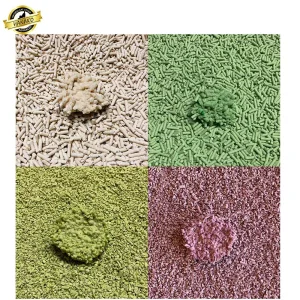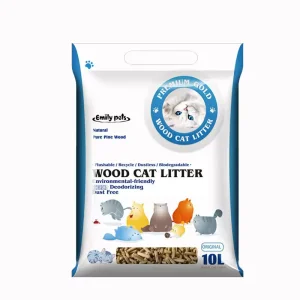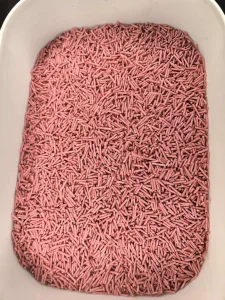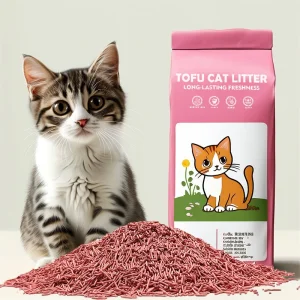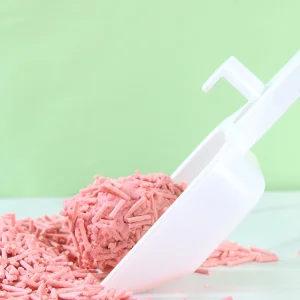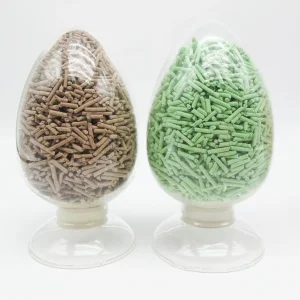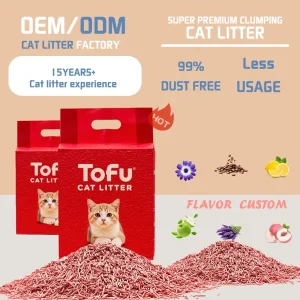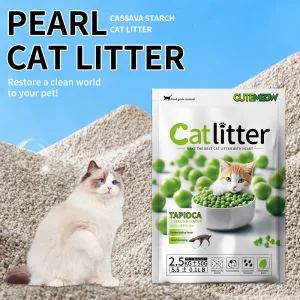
The pet care industry is witnessing a structural transition. Globally, consumers are pivoting away from traditional, silica-based or clay-mined litters due to growing ecological awareness, domestic indoor safety rules, and pet health considerations. Among the array of plant-based materials, strip-shape tofu cat litter has emerged as the premier premium solution in metropolitan markets across North America, the European Union, and the Asia-Pacific region.
Strip-shape tofu litter—primarily manufactured from soybean fiber, food-grade starches, and natural binders—solves a classic commercial paradox: how to deliver rapid liquid absorption and high-integrity clumping without resorting to synthetic chemical adhesives. For B2B distributors and brand managers worldwide, sourcing high-quality strip shape tofu litter from qualified Chinese manufacturers has transitioned from an option to a core strategic advantage. China's advanced agricultural processing supply chains, concentrated heavily in regions like Hebei, provide unprecedented efficiency, consistent access to premium pea and soy raw materials, and high-capacity automated extrusion facilities.
Strict landfill regulations and municipal requirements for biodegradable household waste in the EU and Japan have pushed consumer behavior towards organic, flushable, and fully compostable alternatives.
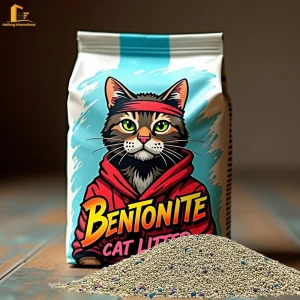
Traditional sodium bentonite clays emit micro-crystalline silica dust upon pouring and digging, leading to potential respiratory issues. Dust-free, food-grade tofu strips mitigate these hazards completely.
Global brands are utilizing strip tofu litter to capture high-margin segments, differentiating their products with customized scents, probiotic enhancements, and premium retail packaging.
The strip-shape format (typically ranging from 1.5mm to 2.0mm or 3.0mm in diameter) is not merely an aesthetic choice. It is a highly engineered geometric configuration designed to maximize structural integrity while optimizing liquid flow kinetics.
When liquid contacts the litter bed, the capillary pathways between the aligned parallel strips channel the urine downward rapidly before it can spread outward across the surface. This vertical flow path results in smaller, more consolidated, and firmer clumps.
The 2.0mm standard diameter balance is particularly critical. If the pellets are too thick (e.g., 3.0mm+), the interstitial spaces are too large, leading to slower clumping and higher usage rates. Conversely, if they are too thin (e.g., 1.5mm), the strips can pack too tightly, slightly decreasing the drainage speed but creating highly dense clumps with minimal usage. Advanced factories optimize these ratios by blending precise quantities of raw starch and dietary fiber to control the swelling index of the material.
| Metric | 2.0mm Strip | Bentonite |
|---|---|---|
| Dust Level | < 0.5% (Very Low) | Moderate to High |
| Odor Control | Excellent (Organic) | Moderate |
| Water Soluble | 100% Flushable | No (Clogs pipes) |
| Biodegradability | 100% Organic | Non-degradable |
*Data validated through factory lab testing. Results may vary depending on local relative humidity levels.
For international buyers, selecting a Chinese tofu cat litter supplier is a multi-layered verification process. It requires looking beyond basic price quotes to examine production capacity, raw material traceability, laboratory testing metrics, and automated dust filtration processes.
The manufacturing of strip-shape tofu litter utilizes industrial twin-screw extruders. The raw pea fiber and starch slurry is forced through high-precision circular dies to create long, uniform cylinders. These wet strips are then instantly cut and transferred to multi-stage mesh belt dryers.
During drying, moisture levels are carefully reduced to the target range of 8% to 10%. Over-drying makes the strips brittle, leading to dust formation during transit. Under-drying leaves the litter vulnerable to mold and bacterial growth inside vacuum-sealed packaging. Professional factories utilize microwave sterilization units at the final drying stage to guarantee microbiological stability.
Private-label importers require distinct, brand-specific configurations to maintain market differentiation. Leading suppliers offer high customization capabilities, including:
Hebei Webvet Pet Products Co., Ltd. is located in the beautiful city of Xingtai, Hebei Province. We are a modernized, high-performance cat litter manufacturer integrating advanced design, raw material research and development, automated manufacturing, sales, OEM/ODM solutions, and global export logistics.
Dedicated to providing companion animals with a comfortable, natural, and safe living environment, our product portfolio is built entirely from organic, degradable raw materials that undergo strict quality controls. We aim to produce every single grain of cat litter with utmost care, helping cats live healthier lives while offering pet parents complete peace of mind.
Our customer-centric support system ensures smooth cross-border transactions. Webvet's products are not only widely distributed throughout China but also exported to over 30 countries and regions, including Europe, Southeast Asia, the United States, Australia, South Korea, Russia, Hong Kong, and Taiwan.

"The world's pet industry, China's Webvet!"
"Webvet Pet, China pet supplies industry explorer!"
"Honesty is the foundation, health is the source, quality is the soul, and fitness is far away." Heaven rewards hard work, humanity rewards goodness, and business rewards trust.

The global cat litter market is evolving beyond basic waste collection towards health diagnostics and circular-economy integration. Leading developers are investing in three primary technological paths:
Integrating non-toxic chemical indicators into the bean fiber matrices allows the litter to detect changes in urine pH. A shift from pale yellow to deep green or blue indicates potential feline lower urinary tract disease (FLUTD), prompting timely veterinary consultations.
While traditional litter relies on artificial scents to mask ammonia odors, next-generation formulations utilize targeted probiotics. These active microorganisms decompose organic matter and neutralize volatile organic compounds (VOCs) at the source, without irritating the cat's olfactory system.
By sourcing raw agricultural by-products (such as pea hulls and soybean residue remaining after oil extraction) from verified local suppliers, manufacturers are significantly reducing the carbon footprint of their products, helping brands meet environmental reporting requirements.
 Webvet Pet